

If you run a local business, you have probably started hearing terms like GEO and AEO alongside SEO. In short, each one helps a different part of how people find you:
- SEO helps search engines find and rank your website.
- Local SEO helps you appear in Google Maps and “near me” results.
- GEO (generative engine optimization) helps AI tools understand and accurately describe your business.
- AEO (answer engine optimization) helps your content work as a clear answer to specific questions.
These are not competing strategies. GEO and AEO build on SEO. They do not replace it. The shared goal is to make your business easier to find, understand, and trust across Google Search, Google Maps, and AI-powered search.
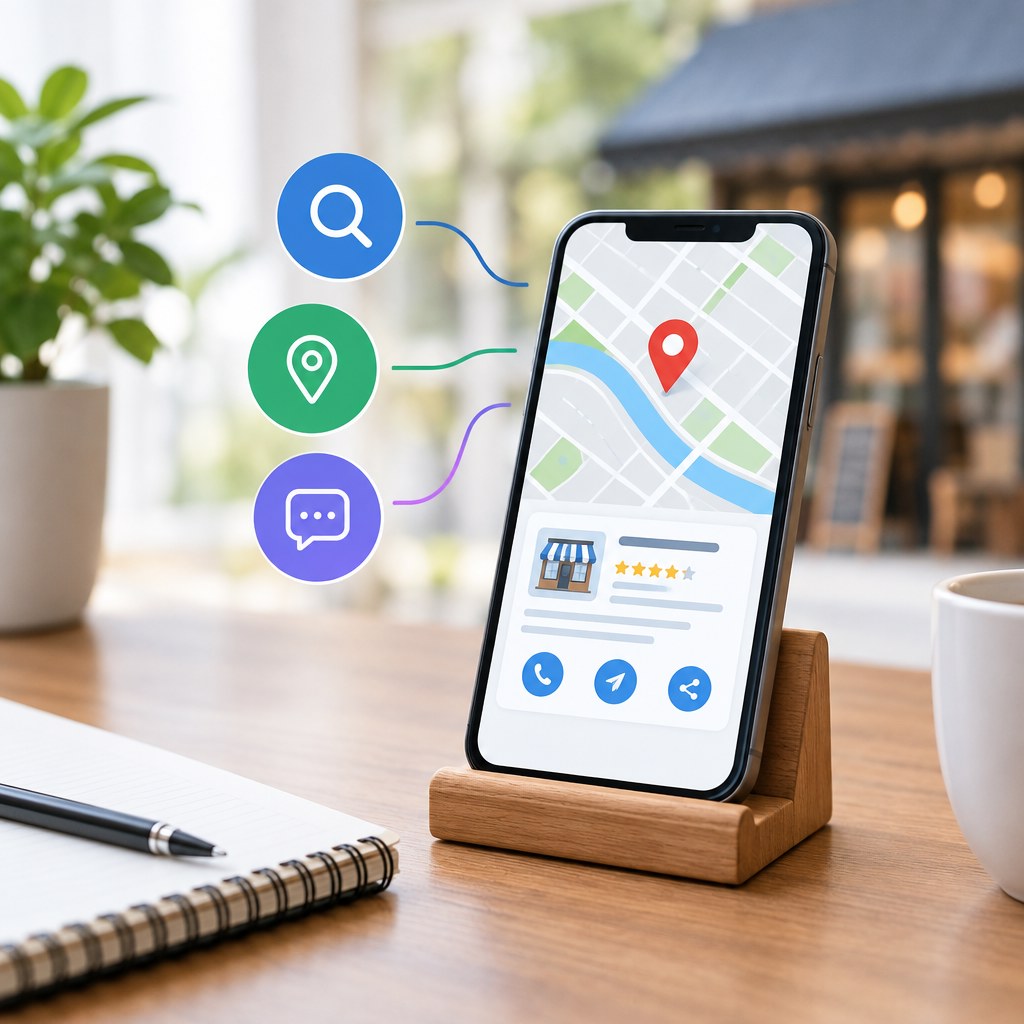
What SEO and Local SEO Do
Search engine optimization is the foundation. It covers three main questions:
- Can search engines crawl your site?
- Do your pages match what people actually search for?
- Does your site earn trust through helpful content and links from other sites?
Local SEO narrows that focus to geography. When someone searches “plumber near me” or “bakery in Riverside,” Google considers relevance, distance, and prominence. Several things feed into those local results:
- Your Google Business Profile
- Consistent name, address, and phone details
- Customer reviews
- Location-specific pages on your website
What GEO Means
Generative engine optimization is about how AI-powered tools summarize information. Examples include Google’s AI Overviews, ChatGPT, and Perplexity. These tools draw on content they can access and interpret.
Your website and listings should state your services, service area, and credentials clearly and consistently. When they do, AI systems have better material to work with when describing businesses like yours.
There is no secret trick or hack. GEO mostly rewards the same qualities good SEO does: clarity, accuracy, and credibility.
What AEO Means
Answer engine optimization focuses on questions. People increasingly search in full sentences, such as “How much does it cost to replace a water heater?” or “Do I need an appointment for a tire rotation?”
AEO means structuring your content so a direct, accurate answer is easy to find. Put the short answer first and the supporting detail after. That format helps human readers, featured snippets, voice assistants, and AI tools alike.
How They Work Together for a Local Business
In practice, one well-built asset usually supports all four approaches at once. These are the areas that matter most:
Service Pages
Give each core service its own page. Explain what it includes, who it’s for, and what customers should expect.
Location Information
State your address, service areas, and hours plainly. Keep them identical everywhere they appear.
FAQs
Answer the questions customers actually ask by phone or email. Lead with a direct answer.
Internal Links
Connect related services, locations, and FAQs. This helps visitors and search engines see how your offerings relate.
Google Business Profile
Choose accurate categories, add real photos, list your services, and respond to reviews.
Clear Entity Information
Make who you are, what you do, and where you operate unmistakable. Structured data can reinforce this.
For example, imagine an HVAC company with a dedicated “furnace repair in Springfield” page. The page includes a short FAQ about repair timelines and links to its maintenance plans. It also matches the company’s Google Business Profile. That single page supports traditional rankings, local relevance, direct answers, and clearer AI summaries.
A Practical Process: Measure, Improve, Repeat
Azzip combines proven search fundamentals with modern AI-search optimization using a simple cycle:
- Measure: Review current search, Maps, and AI visibility.
- Identify Opportunities: Find missing services, unclear details, or unanswered questions.
- Improve: Strengthen existing pages and listings.
- Create: Add content that fills real gaps.
- Measure Again: Compare results and adjust.
What You Can Realistically Measure
AI visibility checks are research and measurement, not guaranteed ranking data. AI answers can change based on phrasing, user, and timing. Treat them as useful snapshots that reveal patterns over time.
Frequently Asked Questions
Do I still need SEO if people use AI search?
Yes. AI tools often rely on the same crawlable, credible web content that SEO helps create. Strong SEO remains the foundation.
Can anyone guarantee my business appears in AI answers?
No. Nobody controls what AI tools recommend. Good work improves clarity and credibility, but it cannot promise placement.
Where should a small business start?
Start with an accurate Google Business Profile, clear service pages, and consistent location details. Then add FAQs based on real customer questions.
Summary
SEO, Local SEO, GEO, and AEO work best as one strategy. Clear, accurate, trustworthy information helps you get found in Google Search, Google Maps, and AI-powered answers alike. Measure where you stand, improve what matters, and keep checking your progress.
Want a Clearer Picture of Your Search Visibility?
Talk with Azzip about where your business appears today and which practical improvements could help customers find, understand, and trust you.
